As we transition into 2025, it is imperative to reflect on the dynamics shaping law enforcement training and their broader implications. The rapidly evolving demands of modern policing necessitate intellectual independence and a commitment to evidence-based practices. By fostering clarity, adaptability, and accountability, officers can navigate the complexities of today’s training landscape with greater confidence and effectiveness.
Law enforcement training often exists within a spectrum of static and adaptive systems. Static (closed) systems, rooted in tradition, prioritize compliance with minimal standards, providing consistency but often failing to address the dynamic realities of street work. These systems can leave officers ill-equipped to handle the unpredictable nature of real-world scenarios. In contrast, adaptive (open) systems integrate cutting-edge methodologies, such as scenario-based exercises and decision-making under stress, offering practical tools that mirror the complexities of policing. Agencies that embrace such adaptive approaches position their officers to perform with competence, ensuring public safety and organizational accountability.
A significant challenge within this training ecosystem lies in the influence of cult-like behaviors propagated by online personalities. Social media has amplified the reach of these figures, creating devoted followings that often resist critical evaluation. The unquestioning loyalty these trainers inspire can stifle intellectual curiosity and inhibit the growth of both individual officers and the broader profession. Cult-like tendencies in this context are marked by a reliance on logical fallacy stacking to support popular training paradigms. These arguments, when dissected through the lens of reason, and experience, often collapse under scrutiny, exposing their foundation of appeals to authority and anecdotal evidence rather than robust analysis. The emotional attachment followers develop toward these figures can further obscure objective judgment, transforming professional critiques into perceived personal attacks. This dynamic not only perpetuates flawed methodologies but also creates barriers to constructive dialogue and progress.
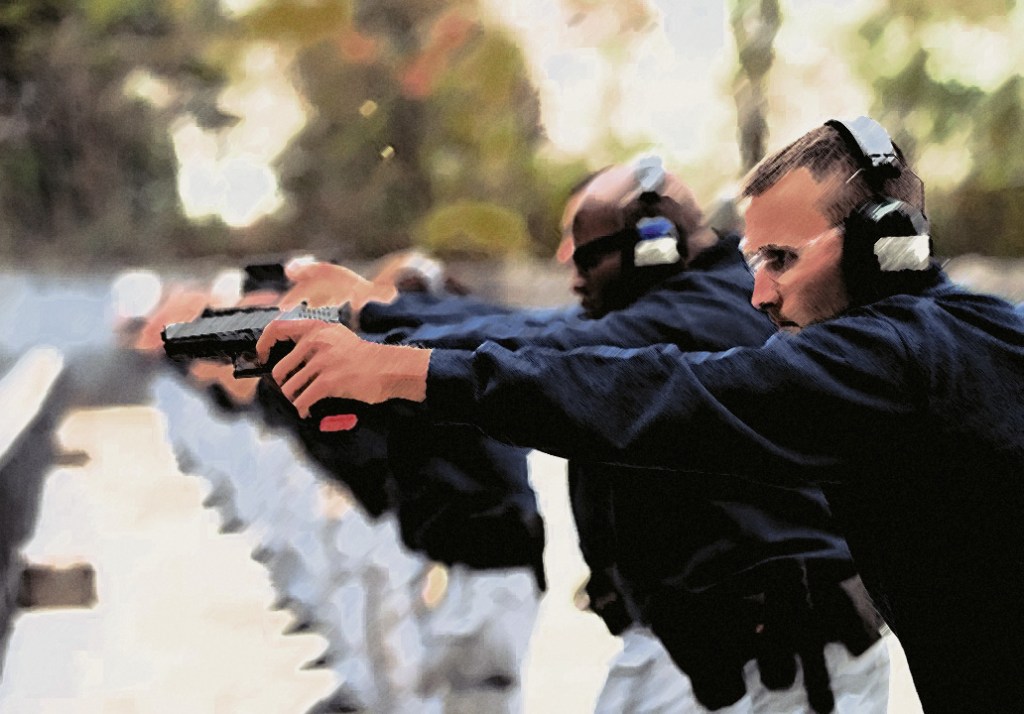
An illustrative example is the continued emphasis on static range drills. While effective for developing basic skills and for burning reps, these drills often fail to prepare officers for the chaotic and fluid nature of real-world confrontations. Despite this limitation, some trainers defend these methods as the pinnacle of preparation, dismissing critiques as challenges to their credibility. Officers who question such practices risk ostracization, as dissent is often framed as disloyalty rather than an opportunity for improvement.
The issue of ideological possession further compounds these challenges. This phenomenon occurs when individuals become so entrenched in a particular training philosophy that they lose the ability to consider alternative perspectives. In the realm of law enforcement, this rigidity can manifest as resistance to emerging technologies or innovative approaches, perpetuating outdated practices that fail to meet contemporary needs. The Stoics’ emphasis on adaptability and reason underscores the dangers of such dogmatic thinking, highlighting the importance of maintaining intellectual flexibility in the face of change.
Departments themselves are not immune to these pitfalls. Institutional inertia frequently hampers the adoption of progressive training methodologies. The overreliance on traditional qualification courses as a measure of competency, for example, fails to capture the multifaceted skills required for effective policing. Similarly, reluctance to embrace tools like virtual reality or force-on-force scenarios leaves officers ill-prepared for high-stress encounters. Overcoming these barriers, as Marcus Aurelius observed, transforms obstacles into opportunities for growth.
Beyond law enforcement, the civilian Second Amendment training community grapples with similar issues. Cult-like behaviors, logical fallacy stacking, and ideological possession inhibit the development of individual practitioners. However, the stakes in law enforcement are uniquely high, as flawed training methodologies have consequences that extend beyond personal performance to impact public trust, officer safety, and legal accountability.
The imperative for intellectual independence and evidence-based practices has never been clearer. By embracing a mindset of critical inquiry and adaptability, law enforcement agencies can empower their officers to navigate the complexities of modern policing. This approach not only enhances individual and organizational performance but also fosters a culture of accountability and innovation. For both law enforcement professionals and civilian practitioners, the rigorous pursuit of truth, guided by reason and logic, offers the most reliable path forward.







 Secønd Støic
Leave a comment