When the astronaut returns to Earth, he sits holding a cup of coffee in one hand. As he begins to speak, he unconsciously releases the coffee, and it drops to the floor. Confused, he looks upward as though expecting them to float, searching for the absent weightlessness of his orbital home. This small gesture, almost humorous, exposes a profound truth about human behavior. It demonstrates how deeply our biology encodes experience into habit. Months of microgravity had rewired his sensorimotor expectations. His nervous system, conditioned by thousands of floating objects, had internalized a new normal. On Earth, however, that conditioning persists until a new pattern overrides it through repetition and attention.
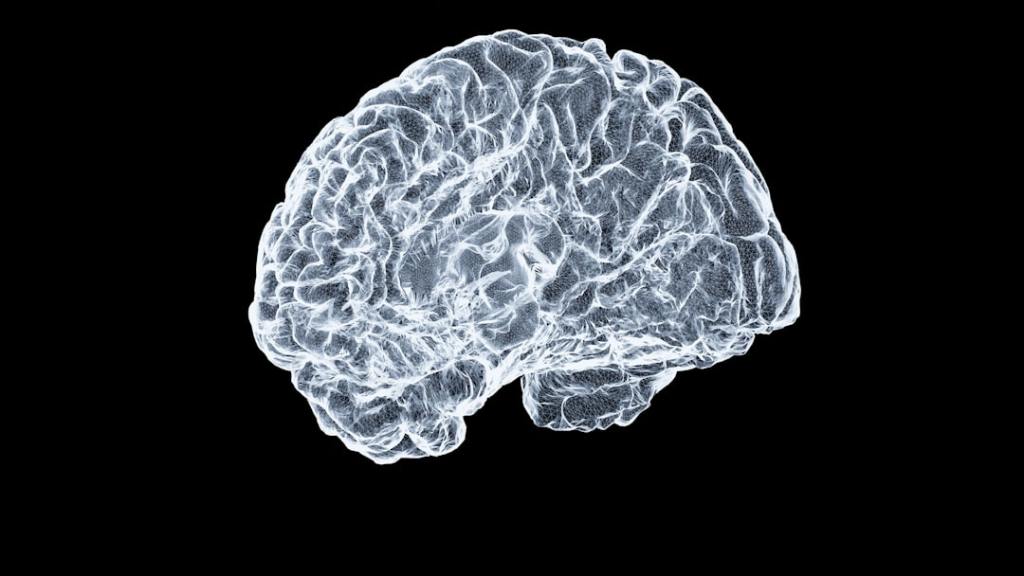
This is the architecture of adaptation. The human brain does not distinguish between the trivial and the vital in the formation of habits. This is especially true for the basal ganglia and cerebellum. It learns what we repeat. “Muscle memory” is neither poetic nor metaphorical. It is an expression of the nervous system’s drive for efficiency. Every skillset rehearsed with enough consistency becomes part of our automatic repertoire. In layman’s terms, you will do what actions you repeat, nothing else. In moments of pressure, conscious thought is suppressed by stress physiology. These circuits, not reflective deliberation, determine behavior.
This biological reality extends far beyond the environment of space. In a video of two officers chasing an armed suspect, this can be seen as well. During the confrontation, one officer is shot and the suspect is injured. The second officer, in the heat of the event, briefly rebolsters his weapon instead of securing the suspect. Only when the suspect regains strength, tries to flee, and then attacks does the officer reengage. That pause, that fraction of hesitation, was not a moral failure. It was not an intentional act. It was the byproduct of overload in a system pushed beyond the cognitive threshold. Under stress, the prefrontal cortex, which is the structure responsible for decision-making and inhibition, loses dominance to older, faster neural mechanisms. The body acts within the limits of its training, not in response to intellectual reflection.
Many still believe that in crisis, humans “rise to the occasion.” Even worse, in some circles, this belief has become a go-to informal logical fallacy. It forms the basis for critical assessments of others’ actions or inactions. Biology tells a different story.
The prevailing notion that humans “rise to the occasion” in crises is neurobiologically untenable. Acute threat triggers sympathetic nervous system activation via the locus coeruleus-norepinephrine system and hypothalamic-pituitary-adrenal axis. This induces a cascade of catecholamines (norepinephrine, epinephrine) and glucocorticoids. These reactions optimize the organism for rapid, ballistic action at the expense of executive function. This manifests physiologically as elevated heart rate, vasoconstriction, and pupillary dilation. It also includes sensory filtering, such as tunnel vision and auditory exclusion. Catecholamine surges beyond the Yerkes-Dodson inverted-U optimum impair dorsolateral prefrontal cortex (dlPFC) persistent firing. This reduces working memory capacity, evidenced by reduced BOLD signal in fMRI studies of high-stress paradigms. It also leads to impaired N-back task performance under pharmacological noradrenergic challenge. Consequently, volitional reasoning collapses. Control shifts to evolutionarily older cortico-striatal-thalamo-cortical loops and cerebello-thalamo-cortical pathways. These govern procedural memory and habit execution. Overlearned motor chunks emerge with minimal top-down oversight. These chunks are consolidated through Hebbian synaptic potentiation and dopaminergic reinforcement in the nigrostriatal pathway. Devaluation paradigms demonstrate insensitivity to outcome value in habitual responding . Discipline versus disaster hinges on pre-crisis rehearsal density. This density entrenches stimulus-response-outcome contingencies via long-term potentiation in sensorimotor circuits. Behavior under duress becomes a probabilistic readout of prior repetition instead of spontaneous genius. There is no latent algorithmic novelty. The deterministic unfolding of installed attractors in state space is observed. High-fidelity simulations corroborate this, like police force-on-force exercises, where performance fidelity scales linearly. This scaling occurs with training specificity under psychophysiological stressors mimicking real-world arousal profiles.
This understanding imposes a moral and practical imperative on training. Whether you are a soldier, cop, bus driver, or a surgeon, your daily routines shape your identity. The patterns engraved through repetition define who we are, and what we can be capable of. A civilian navigating ordinary life experiences the same effect in moments of chaos. The astronaut’s hand opening over Earth, the officer’s hesitation in the face of mortal threat, both expose the same truth. We are not creatures of inspiration, but of preparation. Our biology ensures that in the instant we cease to think, we revert to what we have most consistently practiced.
“If you would not have a man flinch when the crisis comes, train him before it comes.” -Epictetus
Biological limits rule crisis response through ingrained neural patterns. In the face of these limits, reality based training offers the clear path forward. Seek out the type of training that is proven in real violence and courts of law. These methods are tested by after action reports, while forensic reviews and legal defenses hold up under scrutiny. They build defensible actions into automatic habits. These habits form before stress shuts down clear thinking. Stoic wisdom guides this choice. True control lies only in what you can shape beforehand through relentless discipline over desires, aversions, and intentionally seeking out hardships. Virtue demands indifference to outcome, comfort, or novelty. Focus solely on repeated practice of rational action until it becomes second nature. External chaos tests nothing new, it reveals the character already formed. Skill emerges predictably from what repetition has installed. Choose proven training over fads until automaticity meets every demand.
SOURCES:
The sympathetic nervous system’s response to acute stress involves locus coeruleus norepinephrine release and hypothalamic-pituitary-adrenal axis activation, impairing prefrontal cortex function beyond the Yerkes-Dodson optimum. Arnsten, A. F. T. (2009). Stress signalling pathways that impair prefrontal cortex structure and function. Nature Reviews Neuroscience, 10(6), 410–422. https://doi.org/10.1038/nrn2648 This manifests in reduced dorsolateral prefrontal cortex persistent firing, as seen in pharmacological noradrenergic challenge studies showing N-back task deficits. Robbins, T. W., & Arnsten, A. F. T. (2009). The neuropsychopharmacology of fronto-executive function: Monoaminergic modulation. Annual Review of Neuroscience, 32, 267–287. https://doi.org/10.1146/annurev.neuro.051508.135535frontiersin+1
Control shifts to cortico-striatal loops in the dorsolateral striatum and putamen, where habits persist despite devaluation due to Hebbian potentiation and nigrostriatal dopamine reinforcement. Yin, H. H., & Knowlton, B. J. (2006). The role of the basal ganglia in habit formation. Nature Reviews Neuroscience, 7(6), 464–476. https://doi.org/10.1038/nrn1919 Cerebello-thalamo-cortical pathways execute overlearned motor chunks with minimal oversight, insensitive to outcome changes in habitual regimes. Doyon, J., Gabitov, E., Vahdat, S., Lungu, O., & Boutin, A. (2018). Current issues related to motor sequence learning in humans. Current Opinion in Behavioral Sciences, 20, 89–97. https://doi.org/10.1016/j.cobeha.2017.12.010[kenhub][youtube]
Performance under stress scales with rehearsal density, as force-on-force simulations reveal linear fidelity to training specificity amid realistic arousal. Driskell, J. E., Willis, R. P., & Copper, C. (1992). Effect of overlearning on retention. Journal of Applied Psychology, 77(5), 615–622. https://doi.org/10.1037/0021-9010.77.5.615 This underscores behavior as probabilistic readout of prior synaptic contingencies, absent novel algorithmic emergence. Gray, R. (2004). Attentional control in sport: A test of the Yerkes-Dodson law. Journal of Sport and Exercise Psychology, 26(3), 437–445. https://doi.org/10.1123/jsep.26.3.437wikipedia+1




 Secønd Støic
Leave a comment