-
 Continue reading →: Clarifying Justice: Barnes v. Felix and the Supreme Court’s Role in Defining Reasonable Use of Force
The Supreme Court’s decision to hear Barnes v. Felix offers a vital opportunity to reassert the principles laid out in Graham v. Connor, specifically concerning the standard of “objective reasonableness” as it pertains to police use of force. In Graham, the Court affirmed that officers’ actions in such cases should…
-
 Continue reading →: Empiricism: Evolution and Modern Application in LE
Empiricism, the philosophical tenet that knowledge comes primarily from sensory experience, has profoundly shaped scientific inquiry and practical application in various fields, including law enforcement. Very simply put, knowledge can only come from experience and observations, which unlike Rationalism, requires doing the thing instead of merely thinking about it in…
-
 Continue reading →: Improving Police Response: Combatting Fatigue and Stress
For the average law enforcement officer, the capacity to rapidly discern, assess, and respond to evolving threats is not just a skill—it’s a lifeline. In critical situations, delays in reaction time or misinterpretations of a threat can have fatal, and severe legal, consequences. Unfortunately, the demands of the profession, including…
-
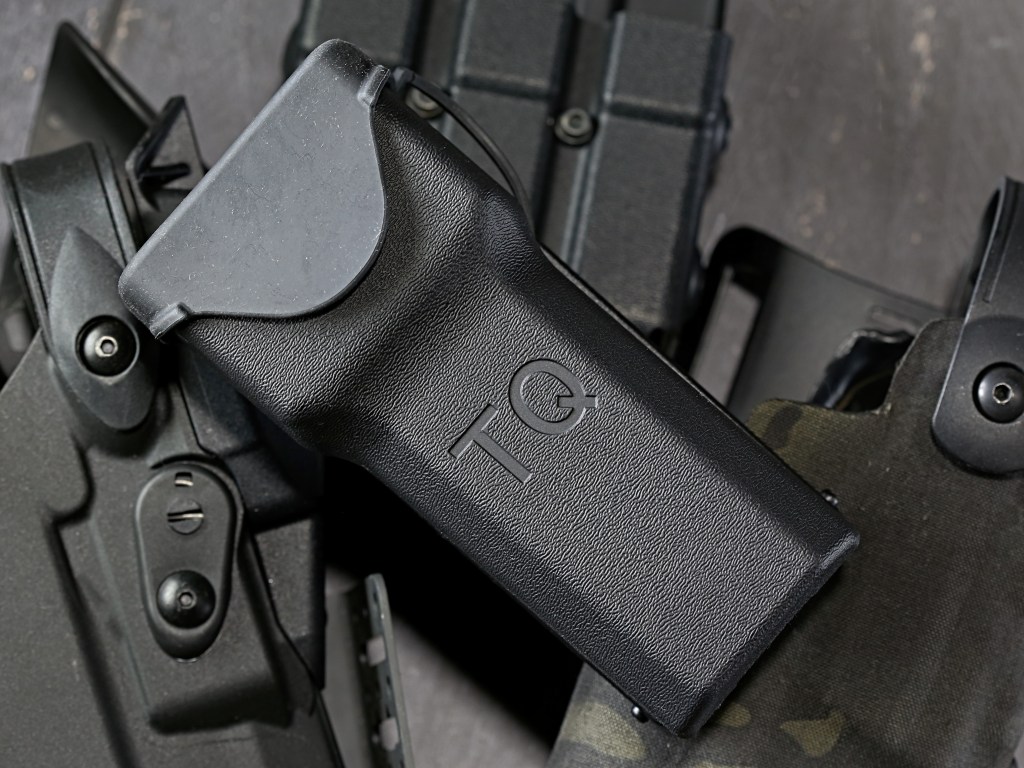 Continue reading →: Initial Use: Zero9Holsters TQ Case
The search for a duty capable tourniquet case, that can be used overtly, and ran within the dynamic world of law enforcement has, hopefully, come to an end. When Zero9holsters launched this I asked them to send me one to test and evaulatute, and while their products are usually really…
-
 Continue reading →: Understanding Vision, Cognition, and Response: The Complexities of Reaction Time in the Real World
In high-stakes professions like law enforcement, the ability to respond quickly and effectively can be the difference between life and death. However, reaction time—often reduced to a singular metric of speed—reflects a multilayered interaction between vision (the input system), cognition (the processing mechanism), and physical response (the output). These three…
SecøndStøic
Articles, and reviews, on various topics including mindset, stoicism, 2a industry products / classes, and other masculine pursuits.
Don’t miss a post
Sign up to get an email when we post!







 Secønd Støic