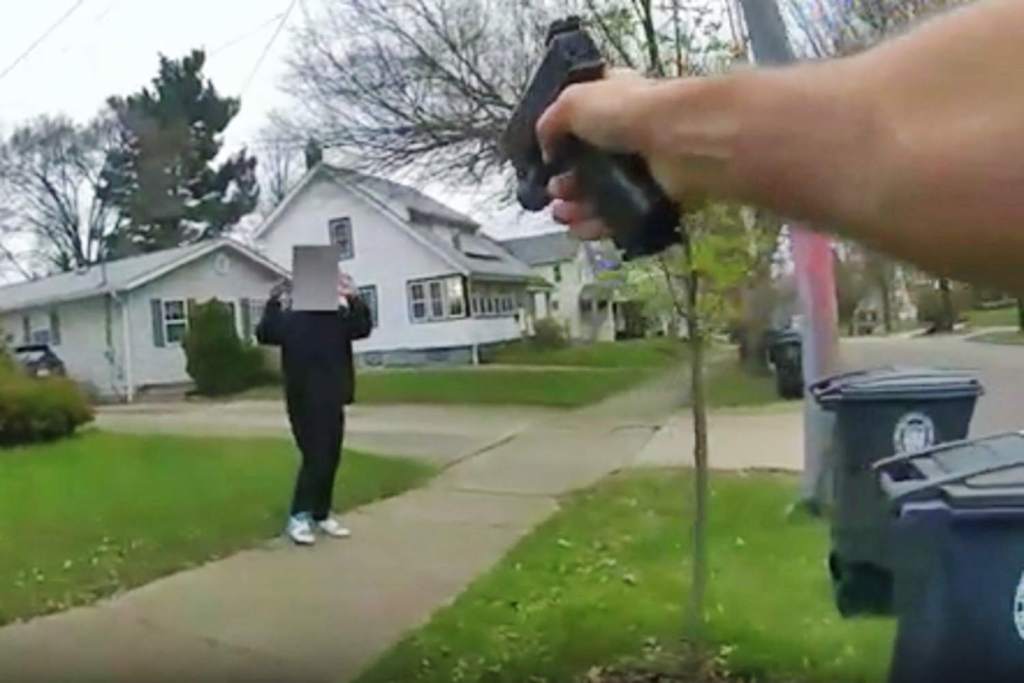
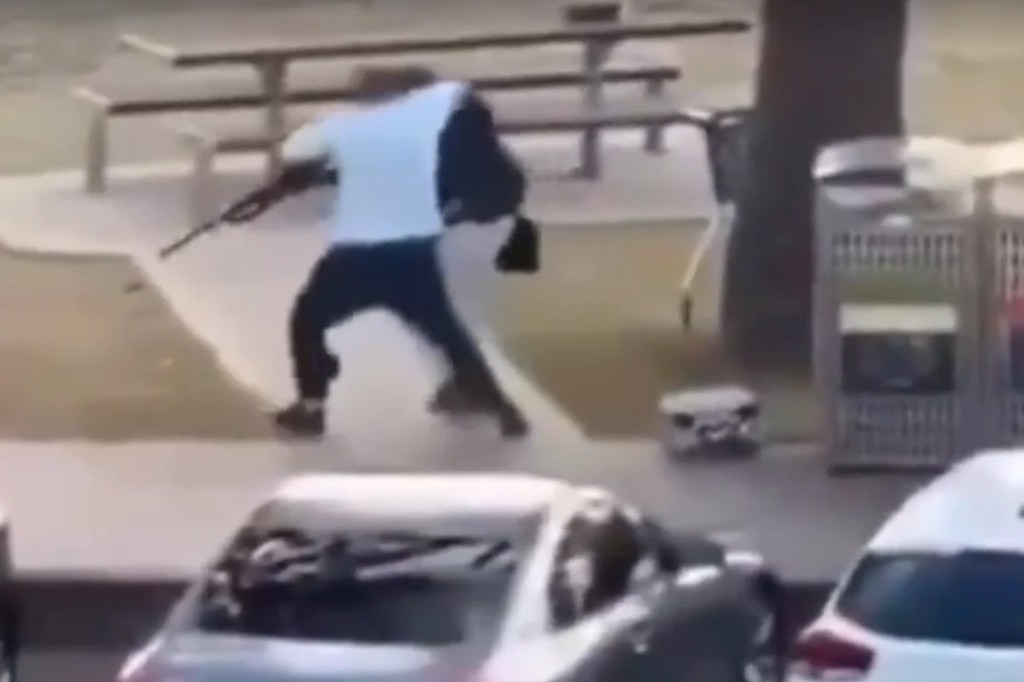
The above video is from Akron PD, a police office responded to a call for a person with a gun, and in this situation the person was a teenager holding a (fake) pistol. The officer did the correct thing, and immediately shot at the threat as the teenager was holding the pistol in his hand when the officer opened his driver’s side front door. While every single deadly force application is a serious one that comes from police-citizen contacts, today we focus on the reality of such circumstances in the real time of the body camera video in hopes that this will shed light on the reality of the human condition. Remember, this is something that will happen to everyone that experiences these types of situations, the only way out of this type of circumstance is training and burning good reps. That’s it. There is no other way.
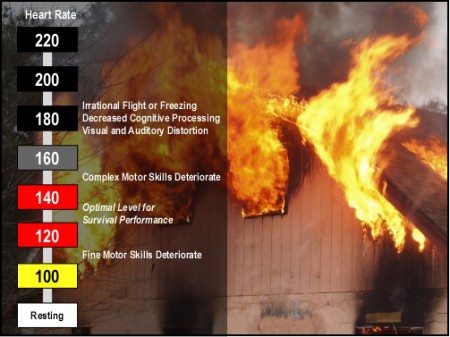
Cooper’s Color Codes of Awareness
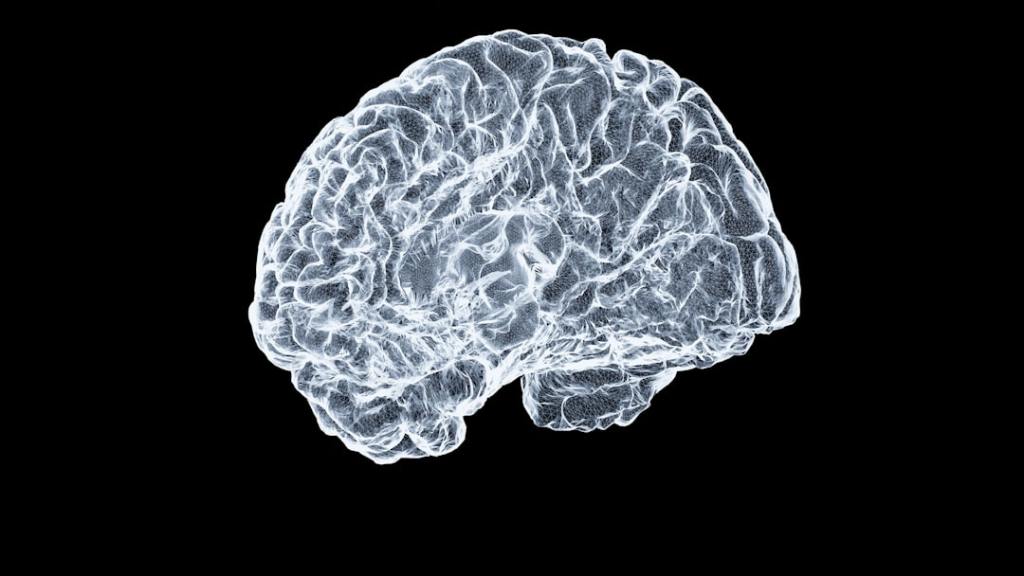
At some point, during this officer’s response, his fight or flight response kicked in, and when we talk about the fight or flight response, we’re diving into one of the oldest and most fundamental survival mechanisms in our bodies. Picture this: you’re out in the wild, and suddenly, you spot a hungry lion eyeing you up for dinner. Your body kicks into high gear, ready to take on the threat or get the heck out of there. This whole process is orchestrated by two main systems: the hypothalamic-pituitary-adrenal (HPA) axis and the sympathetic nervous system (SNS).
The HPA axis is like the command center, coordinating the release of hormones from the adrenal glands atop your kidneys. It starts with a stress signal from your brain’s hypothalamus, which sets off a chain reaction, eventually leading to the release of cortisol, our stress hormone. This hormone helps us deal with more prolonged stress situations, like worrying about bills or deadlines.
Now, the SNS is more like the rapid-response team. It springs into action when there’s an immediate threat, like that lion charging at you. It triggers the release of adrenaline, also known as epinephrine, from the adrenal medulla. Adrenaline is the real MVP here – it revs up your heart rate, dilates your airways for better oxygen flow, and even boosts your energy by breaking down stored glucose in your liver and muscles.
So, when you’re faced with danger, these systems work together to supercharge your body, getting you ready to either stand your ground and fight or make a run for it. It’s an ancient survival mechanism that’s kept our species alive for eons, and even though we might not face lions in our daily lives anymore, our bodies still respond in much the same way to modern-day stressors. Unless you are a police officer in this particular situation, then that survival mechanism kick starts when you perceive a threat, consciously or subconsciously.
So what are the color codes? They were developed Jeff Cooper many decades ago and they go like this:
White: You’re in your civilian mode, totally chill and unaware of any potential threats. You might be lost in thought or scrolling through your phone, completely oblivious to what’s happening around you. It’s like you’re living in a bubble, disconnected from the world.
Yellow: You’ve activated your spidey senses – you’re in a state of relaxed alertness. Your eyes are scanning your surroundings, taking in everything around you. It’s like you’ve tuned into a frequency that lets you pick up on any anomalies or potential threats while still going about your day.
Orange: Danger, danger! Something’s set off your superhero alarm bells. Maybe you’ve spotted a shady character lurking in a dark alley or heard a suspicious noise nearby. In the orange zone, you’re on high alert, mentally preparing yourself to deal with a potential threat if it materializes.
Red: Code red! You’ve identified a clear and present danger, and it’s time to take action. Your adrenaline is pumping, and your superhero instincts are kicking into high gear. You’re ready to leap into action, whether it’s confronting the villain head-on or making a swift escape.
Black: This is the top-secret, super-advanced level – the black code. It’s like activating your ultimate superpower when all other options have failed. In the black zone, you’re prepared to do whatever it takes to survive and protect yourself and others. It’s your last line of defense, reserved for the most dire situations imaginable.
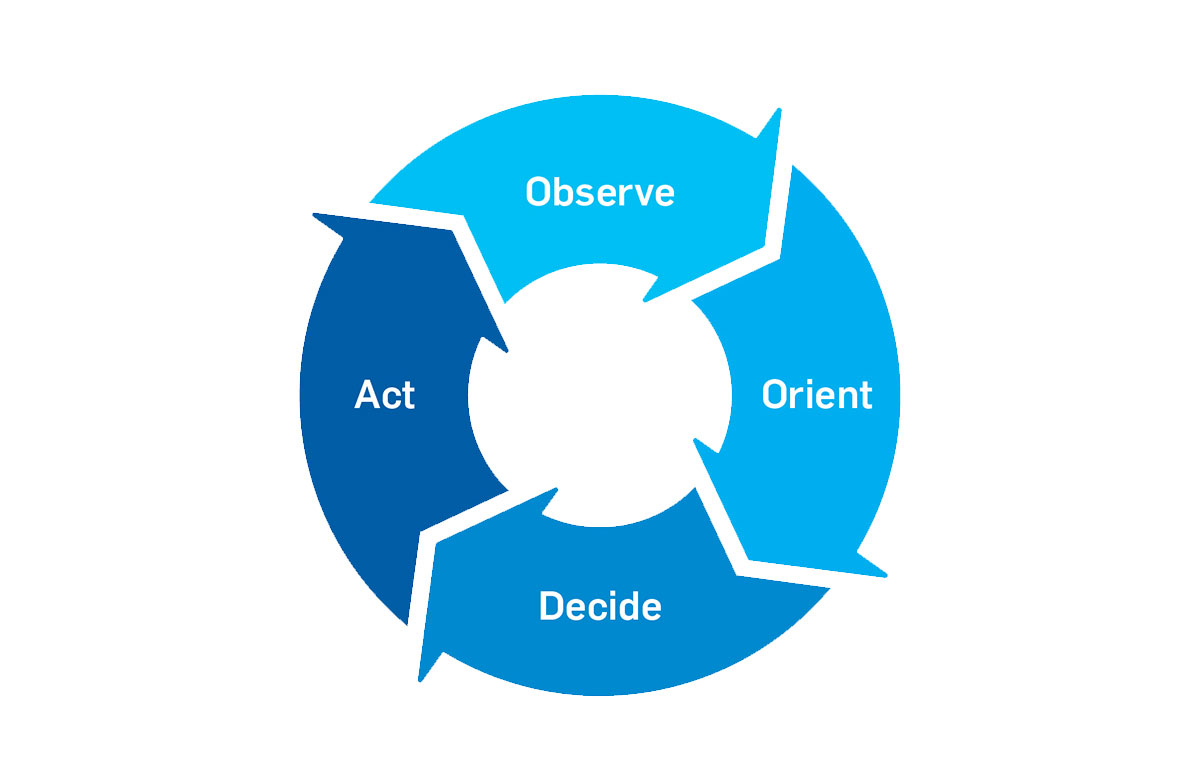
We’ve all heard of the OODA loop, so I won’t re-explain it, but you have to understand that the OODA loop and the heart rate color codes go hand-in-hand.
I want to specifically cover how these things apply to the body worn camera video. You may want to re-watch it now that you’ve read all this technical information.
Why this is important and how it applies to this video
The officer shoots the teen, in the hand that was holding the pistol, this is target fixation. During the fight or flight response, target fixation occurs as a result of heightened arousal and selective attention towards perceived threats. When an individual perceives a danger, such as a predator or an imminent physical threat, the amygdala and other brain regions involved in threat detection become activated, triggering the release of stress hormones like adrenaline. This arousal state enhances sensory processing and directs attention towards the threatening stimulus, leading to a narrowing of focus and an exclusive fixation on the perceived threat. As a consequence, other environmental cues and potential escape routes may be disregarded or overlooked, as the individual becomes hyper-focused on the imminent danger, thereby facilitating a rapid and decisive response to the threat, which in this case was shooting (read stopping) the threat. Once that happened, the Adrenaline Wave has already began.
The officer then quickly put handcuffs on the teenager, which is something that officer was trained to do repeatedly in the academy, did so repeatedly in other violent situations, and more than likely watched other videos where other officers handcuffed people immediately after shooting them. This is very important to understand because he immediately took the handcuffs off. This is a very clear example of someone doing something they burned reps of repeatedly, unconsciously, and then turning around realizing that the situation called for a different action. He could not stop himself from putting the handcuffs on because the Adrenaline Wave was coming over him.
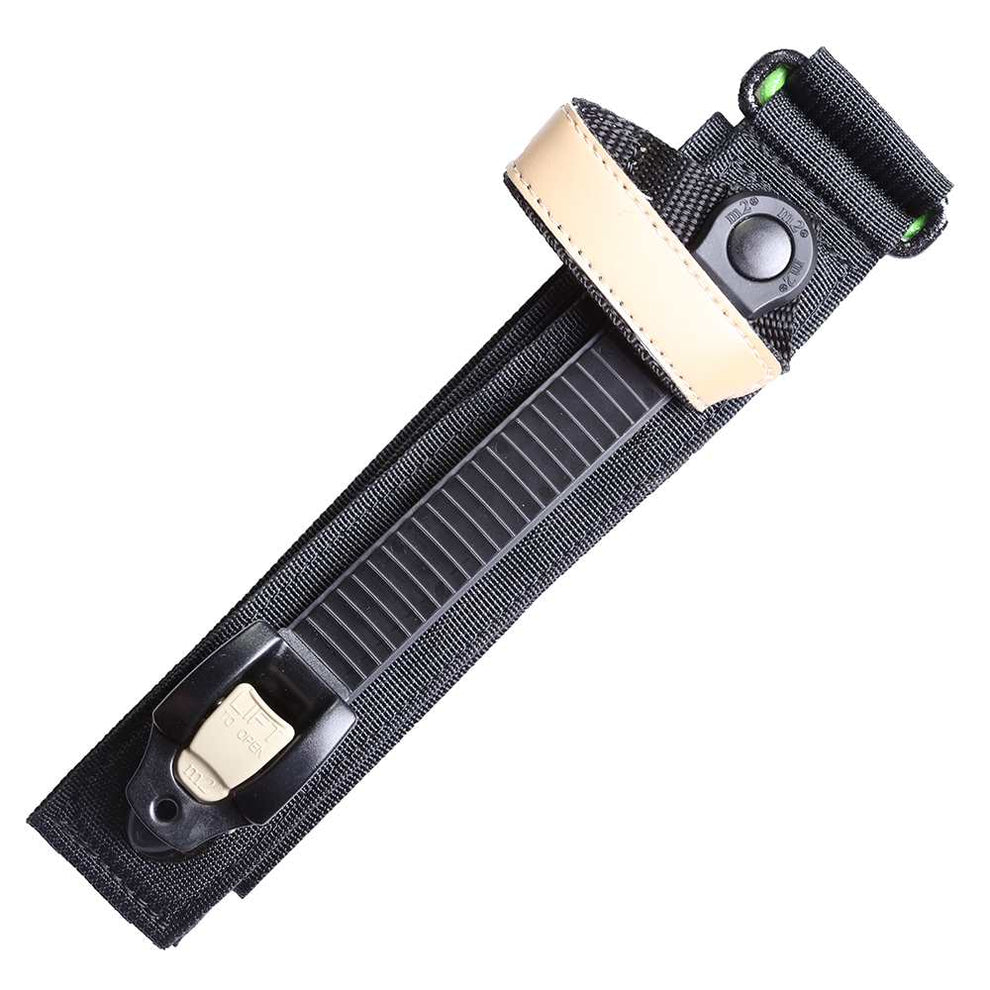
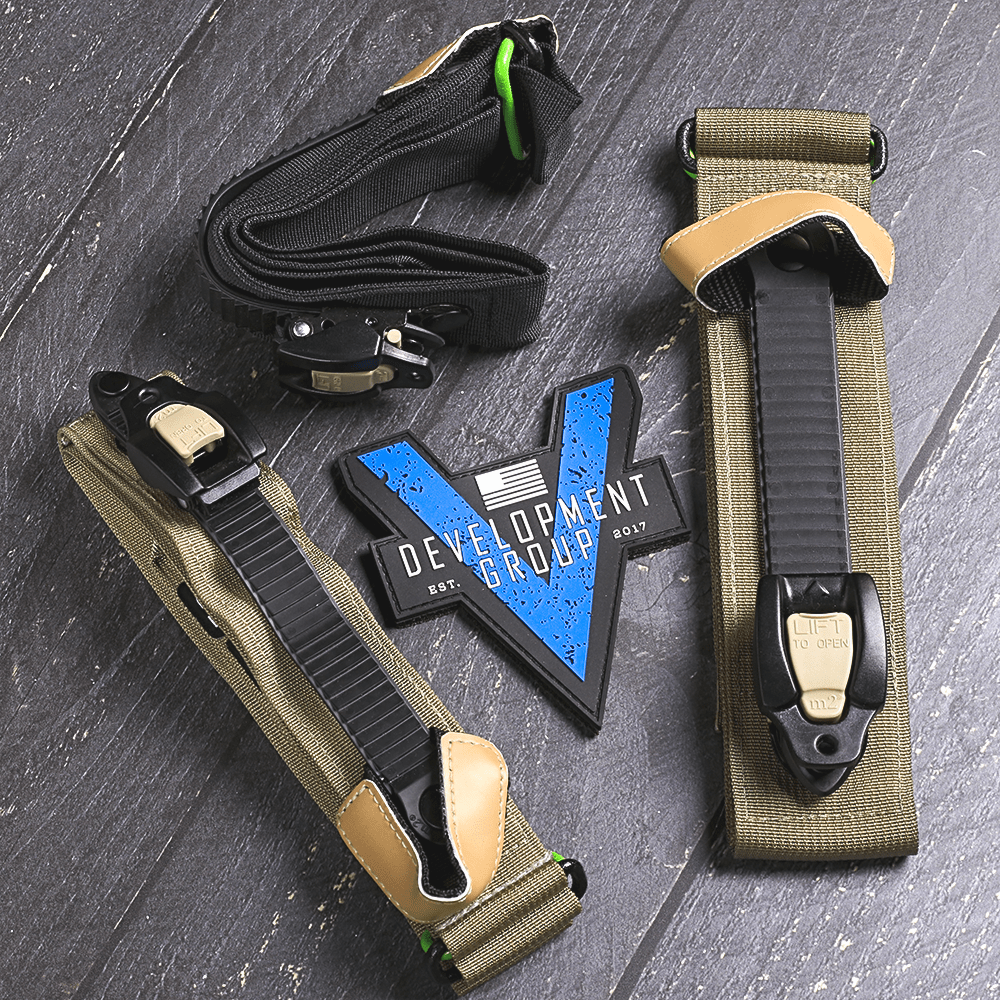
The officer then kicked back into his training, after his moment of clarity, saying he needs a tourniquet applied. He even takes out his tourniquet from his vest. He holds it in his hand, while another officer starts to apply his tourniquet on the teenager. The officer did not apply the tourniquet he pulled out. This is because the Adrenaline Wave coming over him. He then takes out some trauma shears, holding them while the other officer applies a tourniquet on the teenager. The other officer tells him, “you should go over there” yet the officer disregards because he is task focused, because of the Adrenaline Wave coming over him.
The Adrenaline Wave
Once your brain decides it must activate your fight or flight response, the Adrenaline Wave is coming. Just like a wave at the beach. Imagine you are enjoying your time in the warm water at the beach, you are just far enough out that you have keep afloat and cannot feel the sand under your feet. Now imagine there is a massive wave coming, you can see it because you saw the threat, be it consciously or subconsciously. The threat created the wave, but the wave is unlike others you’ve seen recently. The wave is massive. You have to make a choice, consciously or subconsciously (this is where burning good reps comes in), you either have burned the good reps to help you take immediate action of riding the wave to shore (ie; having unconscious competency in the applicable skillsets) or the wave will trample you (ie; having unconscious competency in inapplicable skillsets) carrying you to shore against your will. Either way, you will get back to shore, you may be alive, you may be in one piece, or you may not. The eventual conclusion of your fight or flight response to a dangerous situation rests on various factors, one of the biggest is how prepared you were before the situation. If you trained appropriately, and the level of that training. The contrast here is that completely untrained people just run away or freeze in place. You can see these types of responses in other videos on Officer Involved’s IG page. Some run, some freeze, some simply do not act, however there are a small handful that not only act immediately, but decisively.
The officer in the video in question, holds trauma shears in his hand and does not do anything with them for a decent amount of time, relative to the entirety of the situation. This is not because he does not know what to do, obviously he knows what they do, what they are supposed to do, and what he is supposed to do with them, just like he knew what to do with a tourniquet, and just like he knew what to do with his handcuffs. The levels of reps he burned for each one are massively different, however. That is the cause of his actions, that is the cause of his hesitation.


 Secønd Støic
Leave a comment